
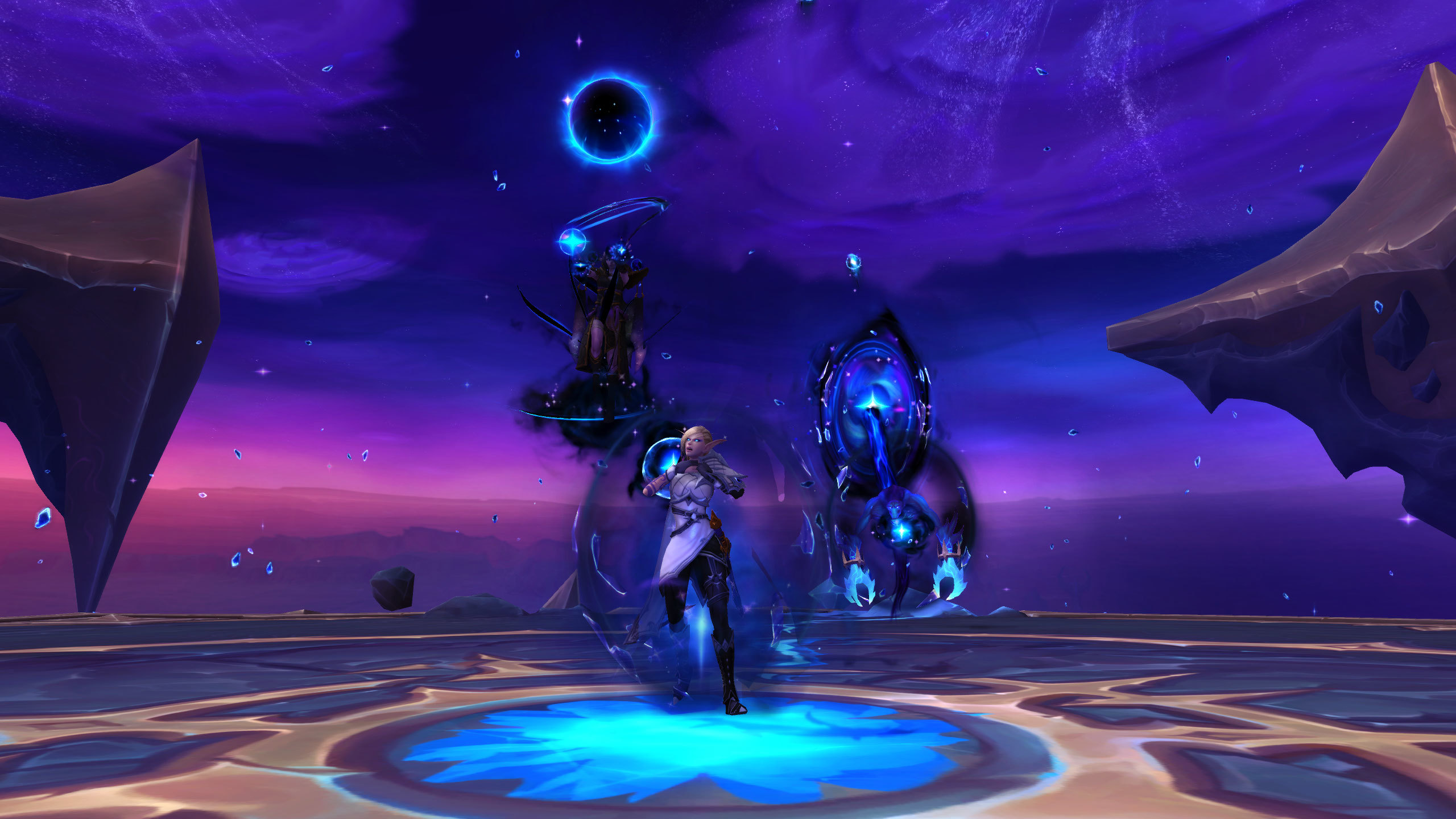
The Void lords of World of Warcraft: Midnight are not a new cosmic threat disconnected from the game’s established lore but rather the ultimate architects behind the most terrifying enemies players have faced throughout World of Warcraft’s entire history: the Old Gods and their Ancient Black Empire. Understanding the connection between Dimensius the All-Devouring, the Void lords, the Old Gods of Azeroth, and the Black Empire that Yogg-Saron, N’Zoth, and their kin attempted to build is essential for appreciating the cosmic scope and historical continuity of Midnight’s narrative. This lore deep-dive traces the Void threat from its origins in the cosmic Void through the Old Gods’ arrival on Azeroth to the present-day invasion of Quel’Thalas.
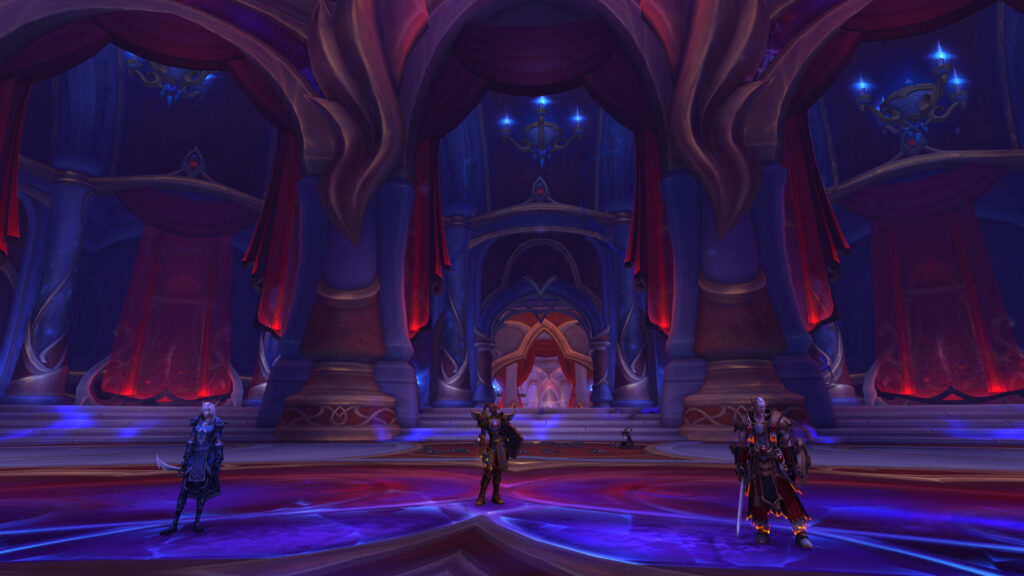
Void Lords and the Creation of the Old Gods
Void lords are the most powerful entities native to the Void, the shadowy cosmic force antithetical to the Light. These incomprehensible beings exist partially outside the physical universe and seek to reshape all of creation into an endless expanse of shadow under their dominion. However, Void lords cannot directly enter the physical universe in their full form: the barriers between the Void dimension and reality are too substantial for even their enormous power to overcome. To project their influence into the physical universe, Void lords created the Old Gods as living instruments of their will: vast, parasitic entities that could be launched at worlds throughout the cosmos, infecting those planets and gradually corrupting them from within.
The Old Gods — including Y’Shaarj, Yogg-Saron, N’Zoth, and C’Thun — are Void lord creations designed to serve a specific cosmic purpose. When an Old God lands on a world, it embeds itself into the planet’s surface and begins corrupting the world’s inherent energies, building what became known as the Ancient Black Empire: a civilization of n’raqi (faceless ones), aqir (insectoid creatures), and other Void-touched entities that serve the Old God’s goal of total planetary corruption. On Azeroth, four Old Gods successfully reached the surface and established the Black Empire, corrupting the Titan-ordered world that the Pantheon had been shaping into a ordered, structured cosmos.
- Void Lords’ Goal: Reshape the physical universe into pure Void by corrupting worlds containing Titan world-souls, transforming them into Dark Naaru (Void titans)
- Old Gods as Instruments: Created by Void lords and launched at target worlds to begin corruption from within, serving as the Void’s physical representatives
- Ancient Black Empire: The civilization Old Gods built on Azeroth, comprising faceless ones, aqir, and Void-corrupted entities serving the Old Gods’ will
- Titan Response: The Pantheon sent Keepers and the Titan-Forged to combat the Black Empire, imprisoning the Old Gods rather than destroying them to avoid damaging the world-soul
- Dimensius’s Role: Unlike the indirect approach of using Old God proxies, Dimensius seeks to enter the physical universe directly, rendering the Old God model obsolete
The critical distinction between Midnight’s Void threat and previous expansions’ Old God conflicts is that Dimensius represents the Void lords abandoning their proxy strategy in favor of direct intervention. The Old God approach — launching parasitic entities at target worlds and hoping they successfully corrupt the planet from underground — proved insufficient on Azeroth, as the Titans’ Keepers imprisoned each Old God and the world-soul’s own defenses resisted complete corruption. Dimensius’s assault on Quel’Thalas and the Sunwell is a fundamentally different and far more dangerous strategy: rather than working through proxies, the Void lords are sending one of their own number into the physical universe to achieve through direct power what the Old Gods could not accomplish through millennia of patient corruption.
The Black Empire’s Legacy and Midnight’s Void Invasion
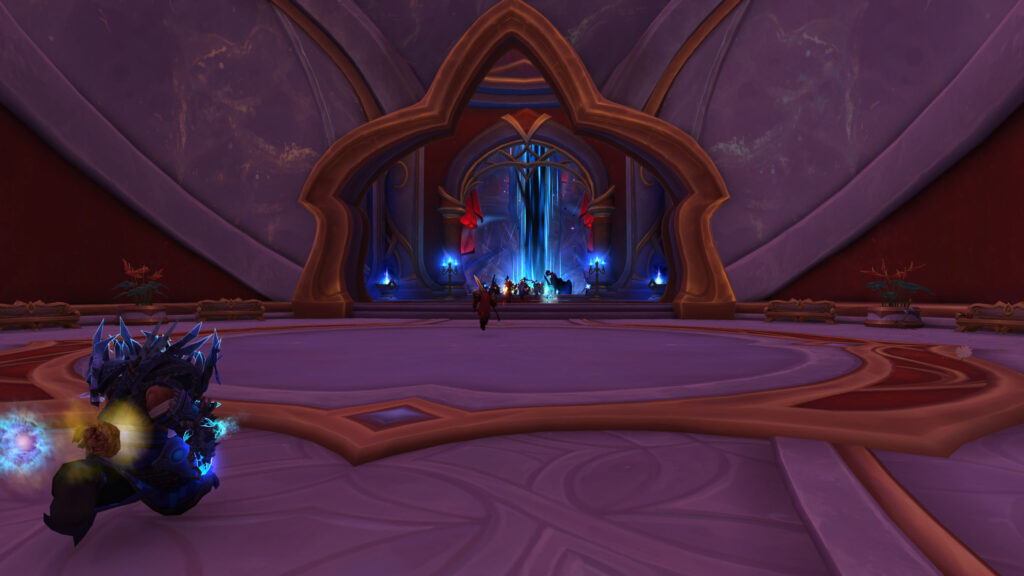
The Ancient Black Empire that the Old Gods built on Azeroth left lasting scars across the planet’s surface and its civilizations. The aqir insectoid race, original subjects of the Black Empire, split into multiple descendant civilizations after the empire’s collapse, including the nerubians of Northrend and the mantid of Pandaria. The faceless ones, the Old Gods’ primary soldiers, continued to serve their imprisoned masters from within their prisons, maintaining the Black Empire’s military infrastructure even after their gods were defeated. Many of the Void-corrupted zones that players encounter in Midnight — particularly in the Ghostlands and the deeper areas of Eversong Woods — sit atop residual Black Empire infrastructure that was never fully purged from Azeroth’s surface.
Dimensius’s invasion of Quel’Thalas exploits these residual Black Empire connections to establish his foothold in the physical universe more quickly than would otherwise be possible. The Void rifts that have opened across Quel’Thalas are not random dimensional accidents but targeted breaches at locations where the Old Gods’ ancient corruption weakened the barrier between the physical world and the Void dimension. These weakened barrier points, created thousands of years ago during the height of the Black Empire’s power on Azeroth, serve as natural entry gates through which Dimensius can project his influence into Quel’Thalas without needing to force open entirely new dimensional rifts through brute force.
| Location | Black Empire Connection | Void Invasion Impact |
|---|---|---|
| Ghostlands | Ancient aqir nesting grounds, Old God corruption residue | Void rifts opened at weakened barrier points from Black Empire era |
| Eversong Woods (northern) | Faceless one incursion zone during Troll Wars era | Void entities emerging through historically corrupted ley lines |
| Zul’Aman underground | Aqir tunnel network connecting to deeper Black Empire infrastructure | Void corruption spreading through ancient aqir tunnels beneath the surface |
| Isle of Quel’Danas | Minimal direct Black Empire presence (offshore location) | Void assault targets Sunwell directly rather than exploiting legacy corruption |
Understanding this connection between the Black Empire and the current Void invasion enriches every aspect of the Midnight zone experience. When players encounter Void-corrupted areas in the Ghostlands, they are not just seeing the results of Dimensius’s current assault but the reactivation of corruption that has been dormant since the Black Empire’s collapse thousands of years ago. The Void invasion is, in a sense, the Black Empire’s final chapter: the last gasp of Old God corruption that the Void lords are reigniting through direct intervention because their proxy strategy ultimately failed.
Old Gods Versus Void Lords: A Threat Escalation
The escalation from Old Gods to Void lords as Azeroth’s primary Void-aligned threat represents an enormous jump in cosmic danger that Midnight’s narrative takes very seriously. Old Gods, while terrifying and powerful, are ultimately limited entities: they are physical beings that landed on Azeroth and can be fought, damaged, and imprisoned by physical means. The Titans’ Keepers successfully confined each Old God to underground prisons, and players have personally participated in the defeat of C’Thun in Ahn’Qiraj, Yogg-Saron in Ulduar, and N’Zoth in Vision of N’Zoth. Old Gods can be beaten through military force and strategic planning.
Void lords operate on an entirely different scale. Dimensius the All-Devouring has already demonstrated his capability by consuming the entire population of the ethereal homeworld K’aresh, an accomplishment no Old God ever achieved. Dimensius did not need to embed himself in K’aresh’s surface and slowly corrupt the planet over millennia as the Old Gods did on Azeroth: he entered the physical universe directly and annihilated an entire civilization through raw Void power. The fact that K’aresh remains permanently scarred and uninhabitable eons after Dimensius’s departure demonstrates that Void lord corruption is more thorough, more permanent, and more devastating than anything the Old Gods accomplished on Azeroth even at the height of the Black Empire.
- Old Gods: Physical entities that require embedding in planetary surfaces, can be imprisoned by Titan forces, defeated by military action
- Void Lords: Cosmic entities existing partially outside the physical universe, can only be opposed by comparable cosmic power
- Dimensius on K’aresh: Destroyed an entire civilization directly, permanently scarred a planet, forced mass exodus of survivors
- Old Gods on Azeroth: Corrupted regions and civilizations over millennia, but were ultimately contained and imprisoned by Titan Keepers
- Threat Comparison: Dimensius represents orders of magnitude more immediate and existential danger than any individual Old God Azeroth has faced
This threat escalation is why the elven peoples of Quel’Thalas, who have survived the Scourge invasion, the arcane addiction, and the political isolation of the Horde alliance, now face what may be the most dangerous enemy in their entire history. Dimensius is not merely another invader to repel through military defense of Quel’Thalas’s borders. He is a Void lord whose very presence in the physical universe threatens to transform Azeroth into another K’aresh: a permanently dead world scarred beyond recovery by Void corruption. The stakes of Midnight could not be higher, and the connection to the Black Empire and Old Gods provides the historical context that makes those stakes viscerally real for players who understand Warcraft’s cosmic lore.
Xal’atath’s Position in the Void Hierarchy
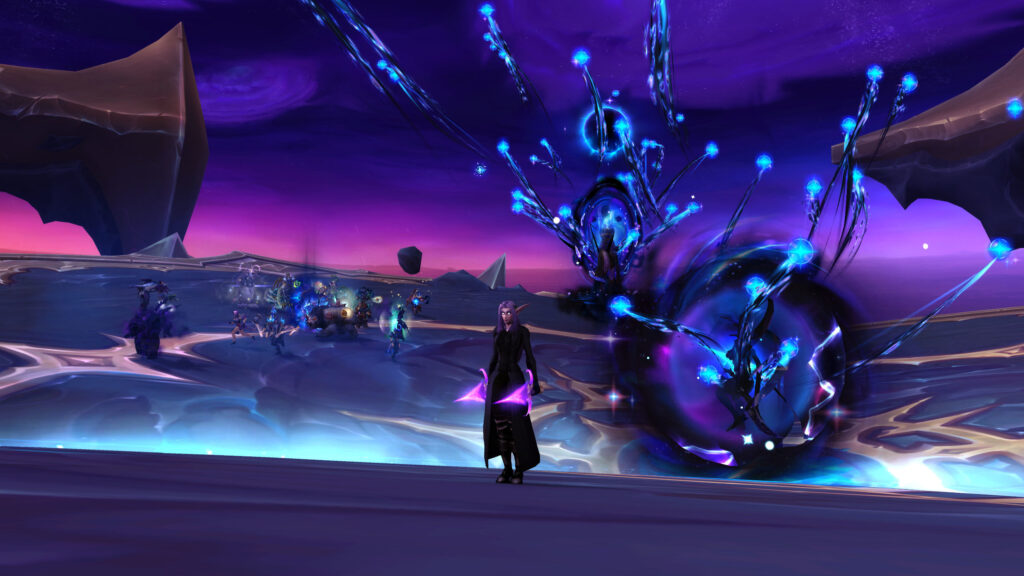
Xal’atath, the Harbinger of the Void, occupies a unique position in the Void cosmic hierarchy that connects the Old God era to the Void lord era of Midnight. Originally the sentient weapon known as the Blade of the Black Empire — a dagger forged by the Old Gods and infused with Void consciousness — Xal’atath gained independence and self-awareness, evolving from an Old God instrument into an autonomous Void entity with her own agenda. Her role as the War Within’s primary antagonist and her presumed continued involvement in Midnight positions her as a bridge between the Old God legacy and the Void lord present.
The question of whether Xal’atath serves Dimensius or pursues her own goals independent of the Void lords is one of the most intriguing narrative threads in the Worldsoul Saga. Xal’atath’s history as a formerly enslaved Old God weapon suggests that she would resist serving any Void lord, including Dimensius, and may instead be manipulating the Void invasion for her own purposes that may align with, diverge from, or even oppose the Void lords’ objectives. Her failed confrontation with Alleria Windrunner at the end of the War Within and her subsequent retreat into the Void dimension leave her current status and allegiances ambiguous, setting up what promises to be a significant revelation in Midnight’s storyline or the subsequent Last Titan expansion.
The Void lord threat in World of Warcraft: Midnight is the culmination of a narrative thread that stretches back through every Old God encounter, every Black Empire remnant, and every Void-aligned entity that players have faced throughout World of Warcraft’s entire history. From C’Thun to Dimensius, the Void has always been the ultimate cosmic antagonist, and Midnight finally brings that antagonist into the spotlight with the directness and intensity that its enormous power and historical significance demand. For players who have followed the Void storyline from its earliest hints in classic World of Warcraft through the Old God raids of every expansion to the present day, the invasion of Quel’Thalas is the moment the Void stops hiding behind proxies and steps onto the battlefield itself.